Far and away: An interview with Andrew Lam
Last March, as his latest collection of stories hit the shelves, I penned a short profile of the Vietnamese-American writer Andrew Lam for Mekong Review. Reposting here for those who didn't see it.

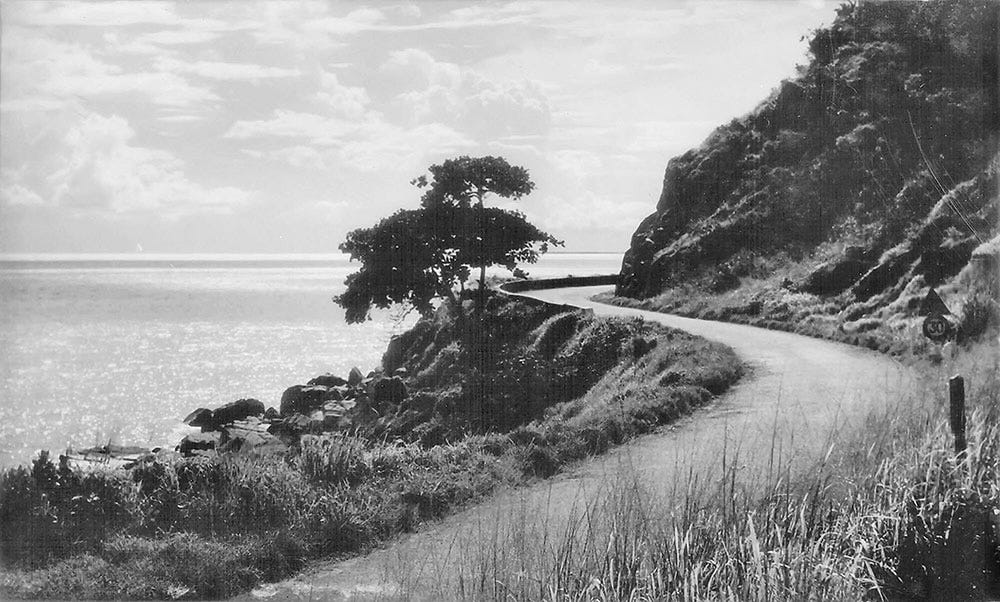
“In this life, we need a kind heart. But do you know why? So the wind may carry it away…” ~ Trịnh Công Sơn, ‘Để Gió Cuốn Đi’
JUST OVER FIFTY YEARS AGO, an eleven-year-old Andrew Lam walked along a beach in Vung Tau, a coastal town south of Saigon, in a state of duress. As the son of a general in the Army of the Republic of Vietnam (ARVN), Andrew had led a sheltered life up until that point. He’d normally have been lolling in a hammock, reading about the adventures of Tintin, but throughout March 1975, the People’s Army of North Vietnam had been marching unimpeded toward Saigon. The war that had divided the Vietnamese people for about twenty years was about to end, with serious implications for Andrew’s family and especially his father, a loyal defender of the southern republic.
Although detained by his own president, who feared a last-ditch military coup, Andrew’s father still managed to send word to his nearest and dearest. His message said that a US Navy ship would come to Vung Tau and allow them to board. Staying in a seaside villa shaded with flame trees that had begun to bloom red, the womenfolk in Andrew’s family got down to business, removing diamonds and rubies from their bracelets and rings – currency for wherever in the world they would end up. As they worked they spoke of the dangers – from robbery to murder and rape – of a perilous voyage on a random ship. It was too much for an eleven-year-old to bear. So Andrew slipped away to the beach in the hopes of spotting an American flag on the horizon, only to see… nothing.
Unable to articulate his fears, Andrew began to perform a “strange dance” while uttering a made-up incantation, hoping he could use magic to manifest a ship into sight. “A catastrophe was descending upon my world, and I had no way to process it,” he wrote many years later in a poignant essay about revisiting Vung Tau in 2022. “How long I performed this magical dance I cannot remember, but it ended when I heard my name called out. I turned and saw my sister [...]. ‘Bad news’, she said, ‘The American ships are not coming’.”
The family hurried back to the city to find an alternative escape route. On the morning of 28 April 1975, just two days before Saigon fell, Andrew, his mother and his sisters piled into a crowded cargo plane and flew to the Philippines. After travelling through refugee camps in Guam and then Camp Pendleton, a military base in California, they eventually made it to a cramped apartment in a fog-filled San Francisco. Their future in this strange new world was uncertain, but still they wept with joy upon hearing that Andrew’s father had also managed to escape.
“When I spoke up for those that couldn’t, I found my tongue”.
IN THE LAST DAYS OF APRIL 1975, approximately 125,000 people fled the soon-to-be-defunct republic of South Vietnam. Many of them were government officials, military personnel and their families, all of whom feared persecution under the new regime. Statistics vary, but over the next fifteen years, it’s estimated that over 800,000 Vietnamese undertook far more perilous journeys than what the Lams experienced. Known as “boat people”, they would have mostly set out in the dead of night, uncertain of where they might end up (and many didn’t end up anywhere – it’s been reported that well over 200,000 perished before reaching any kind of port).
In many ways, the end of the war in 1975 was a ‘big bang’ moment for the Vietnamese diaspora, triggering one of the largest waves of displacement in the late twentieth century. Andrew has since become the author of four collections of stories – two fiction, two non-fiction – but had never set out to be the preeminent chronicler of this newly formed global tribe. After somewhat embracing the American dream and largely ignoring his own Vietnameseness as a kid, he’d appeared to be destined for another path. Much to the approval of his father, who had reinvented himself in the US as a banker, Andrew went to UC Berkeley to study biochemistry. But, after a bad break up, he picked up a pen and began to write, feeling like he’d been exiled all over again. It was only then that he began to revisit the emotions he’d felt while standing under a punishing sun, queuing for food rations in a hastily erected tent city in Guam, wondering if he’d ever see his homeland, friends or father again.
Sensing he had something to offer as a man of letters, Andrew dropped out of biochemistry (his father was horrified) and signed up for an MFA in Creative Writing at San Francisco State University. In 1991, fresh out of college, he picked up a gig with the Pacific News Service, an alternative news media organisation, posing as an interpreter to report on the harsh conditions that Vietnamese refugees suffered in one of Hong Kong’s closed refugee camps – essentially maximum-security penitentiaries with barbed wire and prison guards. In 1993, he received the Outstanding Young Journalist Award from the Society of Professional Journalists and, over the next two decades, wrote hundreds of articles about the Vietnamese diaspora. “When I spoke up for those that couldn’t, I found my tongue. And when I told stories of those oppressed and suffering in obscurity, I found my voice, and my direction in life,” he wrote of his formative experiences as a reporter.
Although journalism remained his bread and butter through the 2000s and 2010s, Andrew increasingly used fiction to examine the Vietnamese diaspora’s enduring sense of loss and the complex feelings many have about their cultural identity. Although he switches up the tempo and style in his character-driven narratives (his literary idol is Flannery O’Connor, and his style is ‘show not tell’), he specialises in bittersweet yarns filled with pathos, humour and the desperate longing of deracinated characters. In one story from his first collection, Birds of Paradise Lost, a wealthy real estate agent regrets revealing her Vietnamese heritage to a client: “Why hadn’t she said she was Chinese?” When memories of her escape by boat resurface, she finds herself involuntarily dialling the number of her childhood home in Vietnam. The narrator poses a poignant question: How difficult is it to let the past go? These stories suggest the answer is simple – it’s impossible.
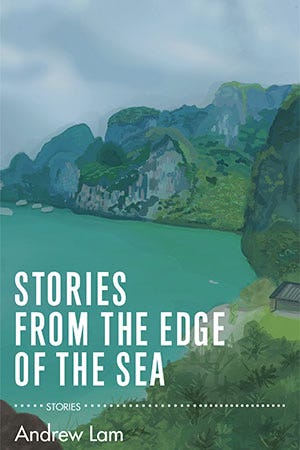
In his latest collection, Stories from the Edge of the Sea (published March, 2025), a mercurial character nicknamed BP (Boat Person) brags about being unscathed by his “Great Escape”. Over cocktails, he casually tells friends he was raped on board a boat as a child, then bursts out laughing as if to suggest he’s just bullshitting. His friends aren’t convinced and take turns suggesting he confront the past, so BP takes sailing lessons to prove he has zero fear of the sea. When the boat he’s on starts to sink, his friend asks if BP is afraid of drowning. Suddenly remembering how his younger self burst into life when adrift and on the verge of death, BP whispers a cryptic riddle before they dive overboard: “I mean, can’t we be both?”
In ‘A Good Broth Takes Time’, another story from the collection, Lam uses pho to illustrate how far and wide the Vietnamese have travelled in the last five decades. A comforting dish that no Vietnamese can live without, pho is like a flag of occupation planted in the most unlikely of places: Rio, Tanzania, Nepal – even a baron’s castle in Belgium. But for one pitiable character, the most exquisite bowl of pho imaginable is one he will never get to taste. It would be made by a childhood sweetheart who is living in a scientists’ colony on the edge of Antarctica. What would he say to her if he travelled all the way from Vietnam just to see her? “Everything. A million things. Like how he ran out after her that day the communist tanks rolled into the city, but he was too late: her ship had already sailed and the world as he knew it shattered.”
“History is trapped in me but history is also mine to work out.”
WHEN I LAST BUMPED INTO ANDREW, who these days leads a peripatetic life, dividing his time between San Francisco, Ho Chi Minh City and places in between, we were in a cafe by the Saigon river. It was not yet April but I wondered if he would stick around for the 50th anniversary of what Americans still call ‘the Fall of Saigon’ but in modern-day Vietnam is known as Reunification Day. But no. Instead, he would be on the road in the US, teaching on the east coast and speaking with the likes of Viet Thanh Nguyen at an event in California titled: 50 Years of Storytelling: The Evolution of Vietnamese American Voices in Literature.
It’s not that he’d rather avoid being in his old hometown for what was a traumatic event for him, his family, and many others. It’s more that he knows he has the tools to process what he once considered a catastrophe from afar. “It has taken me a long time to come to the realisation that for those whose lives have been inordinately altered by forces of history, the personal is to the historical as brooks and rivers are to the sea,” he has previously said. “History is trapped in me but history is also mine to work out, to disseminate, discern and appropriate, and then transform into aesthetic self-expression. So I write. And write. And write.”
Enjoy this essay? You can make a small payment via Ko-Fi or directly via Paypal below.
The above essay was originally published by Mekong Review in May, 2025.
You can get more info about Andrew’s Book at his publisher’s website. It’s also available at the usual sites like Amazon. But please consider supporting your local bookshop rather Mr. Bezos — you can also order via Bookshop.org, an online bookstore that supports independent local bookstores.
Thanks for posting -- See you in Feb at Bosgaurus
A very touching article about a very complicated situation. I’m glad he survived and is telling both his story and that of others.