Pulling rank with pronouns
The director's cut of an old 'Letter from Vietnam' – a very short version of this essay appeared in the Guardian Weekly in 2014.

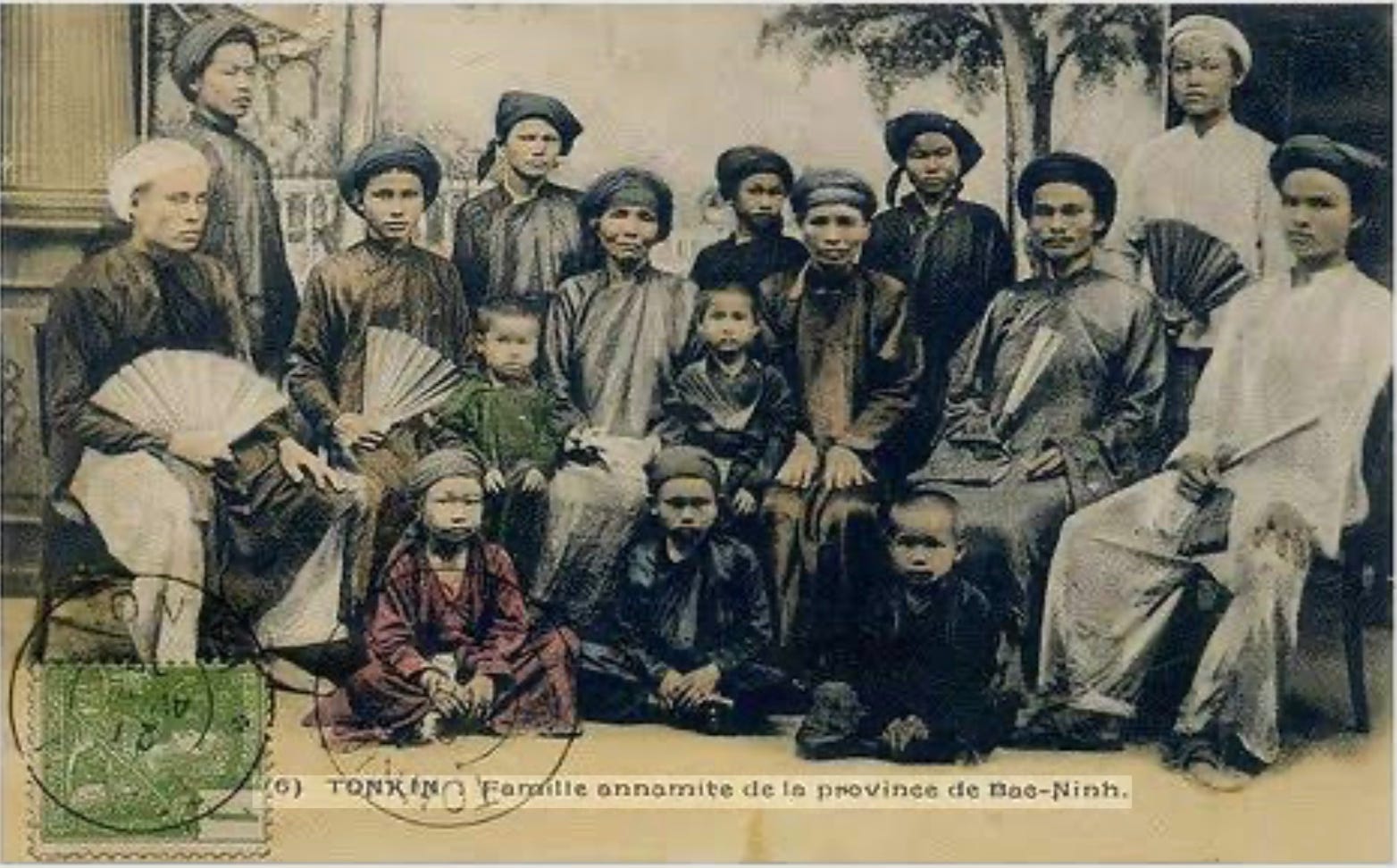
On the occasion of a ‘giỗ’ (death anniversary) in honour of my Hanoi-born son’s great auntie, two distant branches of a family tree once came together in Ho Chi Minh City to put the Vietnamese language’s strict conventions regarding pronouns through their paces.
When conversing, Vietnamese clans will stick rigidly to kinship terms. At large clan gatherings, a few discreet reminders may be required so younger generations know who’s who and how each relative should be addressed. But intergenerational dynamics with extended families can get a little knotty when second marriages come into play. At this particular giỗ in Ho Chi Minh City, I was introduced to my Hanoian partner’s mother’s half-sister’s husband’s step-daughter, an elegantly dressed 70-year-old Saigonese woman who had worked at the US Embassy in Saigon before 1975.
At that time I was just under 40 and to my eyes, she looked like a bác (elder auntie), but I was told to call her chị (older sister). Her septuagenarian husband was the oldest man in the room by a stretch. However, when forced to clamber into his wife’s family tree, he was not on the same branch as the most senior individuals at the dinner. Enjoying the view from that vantage point was my partner’s father. In those days he was in his early sixties but the septuagenarian cousin had to refer to him, with what I thought was a hint of weariness, as chú (uncle).
“Christ, imagine Bill Wyman was Vietnamese,” said my father, after I tried to explain some of these pronoun complexities between bites of the many dishes in front of us.
Wyman, the former bassist of the Rolling Stones, had famously manufactured his own labyrinthine family tree by marrying a teenager called Mandy Smith. Presumably Mr Wyman, 52 at the time of his wedding, was older than his bride’s parents but, if he were Vietnamese, he would still have had to address them as bố/ba and mẹ/má (“dad” and “mum”). Things then got even ickier when Smith’s cougar mother married Wyman’s thirty-year-old son, creating a family tree that seemed to fold back in on itself. Thankfully, both marriages imploded before any children arrived to complicate matters further.
After this brief conversational digression, my father and I continued to enjoy grazing at the giỗ, which is never a solemn occasion but a joyful feast. The food on the table represented both the north and the south, a fitting tribute for a woman who had been born in Hanoi but lived in Saigon for decades: khổ qua nhồi thịt (stuffed bitter melon soup), bì cuốn (fresh spring rolls with shredded pork and rice paper), cá kho tộ (caramelised fish in a clay pot), gà luộc lá chanh (poached chicken with lime leaves), canh măng móng giò (bamboo shoot soup with pork trotters), nộm hoa chuối (banana blossom salad), and xôi gấc (sticky rice coloured with bright red gấc fruit), along with smaller morsels of giò lụa (Vietnamese pork sausage) and pickled vegetables, all of it washed down with beer served over ice until someone eventually unleashed a bottle of whisky on the table.
As everyone ate their fill and shared stories, the pronoun-themed sideshow resumed when a 35-year-old man, technically my ‘nephew’, frogmarched his 10-year-old daughter over and urged her to say “chào ông” (hello granduncle) to me and “chào chú” (hello uncle) to my four-year-old son, who was busy throwing a tantrum under the table.
As one local proverb goes: “Bé như củ khoai mà cứ gọi bằng vai.”
Small as a potato, but call by rank.
At times my father understandably got confused between people’s names and their respective pronouns. At family gatherings, Vietnamese will often use both, so it is clear who they are speaking about: Anh Hoan, Chú Sỹ and Bác Tuyên, and so on.
Even if a relative’s name escapes them, a Vietnamese person will usually still know their rank – a handy convention at larger gatherings.
When my son was born in Hanoi, a celebration was held with dozens of his mother’s clan in attendance. At some stage, I was instructed to pay my respects to a sixty-something-year-old woman as she was the head of the family clan. So, what is her name? I asked, glancing in the matriarch’s direction, admiring her elaborate jade jewellery and emerald áo dài that gave her a rather regal bearing. My partner shrugged as if to say it didn’t matter: “Just say ‘chào bác ạ’ (hello grandaunt).”
Outside of family affairs, Vietnamese people will often use kinship terms, which can be somewhat comforting for foreigners learning the language (and culture). There is a formal word for “I”– tôi – but it feels stiff and is less common in everyday conversation (I’ve personally only ever used it on Duolingo or when conversing with a customer service ChatBot). Mình can also mean “I”, “you”, or “we”, depending on context, which only adds to the confusion (for me, anyway). By and large, people – even those you barely know – deploy warmer, more familial pronouns instead. A shopkeeper or phở vendor might be addressed as chị, anh, chú, or cô (older sister, older brother, uncle, or auntie) and so on. In a way, everyone in Vietnam is part of one enormous extended family – brothers, sisters, uncles, aunts, grandparents.
But when two people of roughly the same age and social standing meet, who becomes the anh or chị and who is relegated to em?
As many foreigners discover, Vietnamese people are quick to ask what year someone was born, which is obviously the quickest way to establish the hierarchy. But inevitably people may try to infer either from looks or conversation which person is older only to get it wrong. It happens. One friend in Hanoi expressed genuine annoyance when discovering someone she had called chị (older sister) for years had turned out to be an em (younger sister).
As lovers and sweethearts will also call one another anh and em, pronouns also set romantic boundaries too (intentionally or otherwise). In Hanoi, I knew a long-term foreign resident and a fairly fluent speaker of Vietnamese. Many years ago, a young woman at a café somewhere in the city had caught his eye, inspiring him to immediately become a regular customer. Every morning, he referred to himself as an ‘anh’ when ordering his coffee but while sipping on his cà phê sữa đá one morning, his middle-aged ears overheard her calling him chú (uncle). It was entirely instinctive on her part but it also informed him how she saw him – not as an anh (older brother), and therefore, possibly a suitor, but an uncle.
“Officially an ineligible bachelor,” he said of himself. “What a kick in the teeth.”
Speaking of uncles, there are quite a few types. In a family you might have a bác (older uncle), a chú (younger than the bác), a cậu (a mother’s younger brother), or a dượng (the husband of an auntie). For aunt, the default pronoun is cô but there are more specific variants – dì (younger aunt), bác (older aunt), thím (an uncle’s wife), or mợ (a younger uncle’s wife).
Indeed, the more a non-Vietnamese person comes to learn about pronouns, the more the subject expands like a concertina. There are literary forms like chàng and nàng, which might appear in folktales. There are also playfully deployed pronouns and family-specific quirks that can leave even a reasonably fluent speaker flummoxed. For no reason in particular, one Hanoian friend used to call my partner’s mum ‘u’ – pronounced a bit like “oo” in English – a countryside term for mum. Two Vietnamese friends of mine also had an unusual, and entirely whimsical, way of referring to other pals in their absence: mẹ cháu or bố cháu, literally “the children’s mother” or “the children’s father”, as though everyone in their social circle were already somebody’s parent at a communal gathering.
When Vietnamese friends speak to one another, they can also cause confusion for non-native speakers and learners. The generic pronoun for friend is bạn. But in Hanoi some good buddies will use “tao” for “I” and “mày” for “you”.
And what else have I missed? Well, at the top of every family, a great-grandparent is cụ, and a great-great grandparent is kỵ. Teachers get their own pronouns – thầy for men, cô for women; Buddhist monks are also addressed as thầy, and policemen are always anh (even if they’re clearly younger than you). Around town, foreigners (well dressed ones) of a certain age may formally be addressed as ông or bà, the same words used for grandad or grandma, though intended to mean “Sir” or “Madam”. But someone who knows you – and likes you – may use a more familiar term (brother, sister, young uncle, uncle).
In an effort to be courteous to a regular customer, one day the clearly older-than-me owner of Café 252 in Hanoi greeted me with “Chào anh” (“Hello older brother”), to which I instinctively replied, “Chào em” (“Hello younger brother”). A loose translation of his response would have done Dr Seuss proud: “Older brother cannot call me younger brother because I am older than older brother, so you must call me older brother, and I will call you older brother too.”
By elevating my status and then immediately pulling rank, he had neatly put our respective pronouns in place.
After that, it seemed easier to order my iced coffee from one of the bakery’s “younger sisters”.
As you were, older brother.
Did you enjoy this story? You can support Connla’s writing by making a payment via Ko-Fi or directly via Paypal below. You can also choose to be a paid subscriber with options for monthly or annual payments.
Wonderful! I actually followed most of it and have experienced a lot of it. With your permission, I will link to this in a future Substack of mine because you explained it so much better than I could.