Thirteen Days in Saigon
Settle in — this is a long read. Pioneer photojournalist Germaine Krull spent thirteen extraordinary days in Saigon in September 1945. This reconstruction follows her through a city on the brink.

“The true photographer is the witness of each day’s events, a reporter.”
— Germaine Krull
Preamble: Born in 1897 in Posen-Wilda, East Prussia (now Poznań, Poland), to German parents, Germaine Krull trained as a photographer in Munich before becoming one of the pioneers of modern photojournalism in Paris. Restless, fiercely independent – her friends nicknamed her Chien Fou (”Mad Dog”) – and deeply sceptical of authority, she worked across Germany, the Netherlands and France, emerging as one of the leading figures of the photographic avant-garde.
When the Second World War broke out, Krull, by then a French citizen, joined the Free French and followed the Allied advance through liberated Europe before travelling to Southeast Asia as a correspondent for the Agence d’Édition et de la Presse. It was in that capacity that she spent thirteen extraordinary days in Saigon during September 1945, arriving just as Japanese rule gave way to British military occupation and the French sought to re-establish their colonial authority.
When Krull arrived, French rule had effectively collapsed. The Viet Minh occupied the city’s principal administrative buildings and claimed to govern in the name of an independent Vietnam. British and Indian troops had landed to supervise the Japanese surrender south of the 16th Parallel, while surrendered Japanese soldiers continued to patrol the streets under Allied orders. No one could say with confidence who was truly in control.
1945: The Road to Revolution
A brief chronology of the events leading to Krull's arrival in Saigon.
9 March 1945: Japanese coup in French Indochina. Japanese forces overthrow the French colonial administration and intern thousands of French soldiers and officials. Admiral Jean Decoux’s Vichy regime effectively collapses, ending more than eighty years of uninterrupted French colonial rule.
March–August: Japanese occupation. Emperor Bảo Đại remains nominal ruler under Japanese sponsorship while French civil authority largely disappears throughout Indochina.
8 May: Victory in Europe (VE Day). Nazi Germany surrenders unconditionally, bringing the war in Europe to an end.
6 & 9 August: Atomic bombings of Hiroshima and Nagasaki.
15 August: Japan surrenders. Across Indochina, the sudden collapse of Japanese authority creates a political vacuum.
19 August: Hanoi. The Viet Minh seize power during the August Revolution.
25 August: Saigon. The Viet Minh and allied nationalist groups establish the Southern Administrative Committee, assuming control of much of the city’s civil administration.
Late August: Colonel Henri Cédille arrives in southern Indochina. Parachuted in by the Free French, he spends several weeks evading the Japanese before reaching Saigon, where he begins tentative negotiations with Viet Minh representatives.
2 September: Hanoi. Ho Chi Minh proclaims the independence of the Democratic Republic of Vietnam in Ba Đình Square.
Meanwhile in Saigon: A mass nationalist demonstration turns violent after gunfire erupts. Europeans and Vietnamese are killed, and reprisals deepen the city’s divisions.
12 September: Germaine Krull arrives in Saigon. Flying from Rangoon with the first British-Indian troops, she enters a city suspended between revolution and the return of empire.
September 12: Germaine Krull has hardly slept. The previous evening was spent nursing glasses of pastis while listening to a Frenchman who had lived in Saigon for two decades lamenting his temporary status as a deracinated exile.
“Ah, Saigon,” he sighed. “For a few years it was perfect, you know. The most beautiful little métropole in all of the world. I will gladly return when everything is settled. Hopefully when you return to Rangoon, you will have good news for me.”
Krull has been told to report to Mingaladon Airfield at two o’clock in the morning. True to the promise of a punctilious British officer, the transport aircraft lifts off from the muddy runway at precisely three, climbing into a moonless sky and heading east.
She sleeps fitfully, waking each time her head nods forward.
Eventually the cabin begins to brighten, enough for her to examine her fellow passengers. Around her is a detachment of Gurkhas, immaculate despite the cramped conditions, their moustaches trimmed with military precision. At the front of the aircraft, their Scottish commander looks eager to arrive and get on with it. General Douglas Gracey, he explains, will follow on another aircraft. “Aye, if anyone can restore order in Saigon,” he says confidently, “it is Gracey. He doesn’t muck about.”
Outside, dawn has arrived. Krull leans towards the window. At first she sees only a pale wash of grey, where land dissolves into mist. Gradually the Mekong Delta emerges, languid and liquid, as though water and earth have yet to settle their boundaries. Broad brown rivers coil across the landscape, doubling back on themselves before dividing into countless tributaries that spread like veins through the wetlands.
As they descend, a thin veil of fog hangs where warm water meets the cooler morning air. Here and there, clusters of roofs are no larger than thumbprints in a landscape heavy with moisture. Smoke rises vertically into the stillness, but nothing below suggests urgency.
Then the sun clears the horizon and suddenly the hazy fields are tinged in green and bronze. Water catches the light and everything shimmers before fading again.
It is her first glimpse of Cochinchina. From eight thousand feet, the landscape seems almost impossibly serene for a country already on the brink of war.
While still in Rangoon, Krull had been warned that Saigon had seen demonstrations and bloodshed for the previous ten days. Was she flying into a revolution? A massacre? She finds reassurance in the calm authority of the Gurkhas. They sit impassively throughout the flight, rifles stacked neatly beside them, veterans of campaigns from North Africa to Burma. Whatever awaits them on the ground, they give no sign of apprehension. If they have learned anything from years of war, it is that panic is of no use.
After disembarking, she walks across the tarmac to the terminal, struck that the entire airport is being run by the Japanese. Under a blazing sun, they are everywhere: directing trucks, driving staff cars, standing sentry, hauling baggage and refuelling aircraft. Their empire has surrendered, yet they have maintained their discipline. A solitary British officer seems to be in command of all operations. He speaks to no one, merely surveys the airfield with his hands clasped behind his back.
Where are the Annamites? Krull wonders. And where are the French?
She joins a military convoy for the drive into the city. Along the roadside, groups of Annamites and Chinese watch the vehicles pass. She sees a few waves but most simply stare. Whether curious, resentful or hopeful, she cannot yet read their faces.
Banners hang from buildings and across the streets:
DOWN WITH FRENCH IMPERIALISM
LONG LIVE THE ALLIES
THE ERA OF COLONISATION IS OVER
Flags also flutter. American, British, Chinese, Viet Minh. Even a Soviet one. To a newcomer the display is bewildering. Who has raised each of them? Are they declarations of allegiance, gestures of gratitude, or simply wagers on who will emerge victorious?
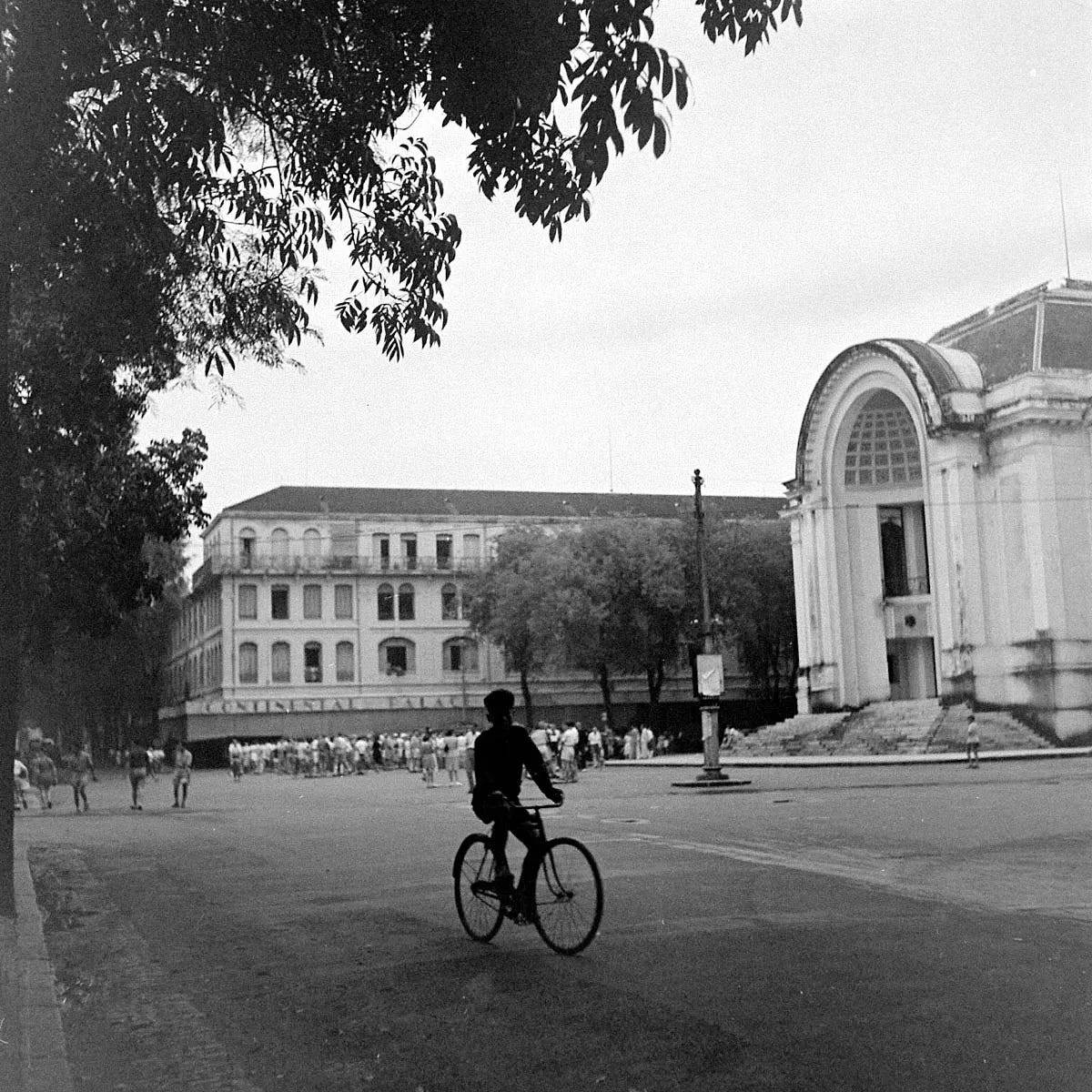
As the convoy enters the European quarter, another city is apparent. Wide boulevards are lined with tamarind trees and townhouses. The twin spires of Notre-Dame Cathedral rise above the trees. The grand Post Office has a familiar pale yellow façade.
More than one European traveller has remarked that Saigon resembles a prosperous provincial town transplanted from southern France to the tropics. Krull immediately sees why. However, as her convoy pulls up outside the Continental Hotel, where she is to stay, a Union Jack is being hoisted above the entrance. Beneath the portico, smoking a cigarette and flanked by two Japanese sentries, stands its Corsican proprietor, Matthieu Francini, immaculate in a cream linen suit. The British have effectively commandeered the hotel, but Francini remains at its helm.
Before he can do more than greet his latest arrivals, a crowd surges towards Krull and the other passengers.
‘Are you French?’ ‘What is Paris like now?’ ‘And Marseille?’ ‘Rouen? Dijon? Tours?’ ‘How much does food cost?’ ‘Do you still get meat?’ ‘When are the French troops coming back?’ ‘Have the vineyards survived the war? ‘
It takes her more than an hour to cross the lobby. The questions grow more frantic.
‘Have you seen my father?’ ‘Do you know my sister?’ ‘How much longer must we put up with these blasted Annamites?’
By the time she reaches her room she is drenched in sweat and exhausted. Before she has even unpacked, someone knocks on the door. More questions follow. The French colonists have lived in near isolation for months. News arrives only as rumour. Europe has become almost mythical. Their world extends little farther than the streets around the Continental Hotel.
At first Krull cannot help feeling some sympathy for them. Yet it fades quickly.
Not one person asks about the Resistance, or how France survived the Occupation. Instead they denounce the Annamites as ingrates and traitors.
‘After everything we’ve done for them!’ one woman exclaims.
‘We built this city,’ insists another. ‘Without us there would be nothing here. Nothing but swamps, mud-tracks and disease.’
Krull eventually closes the door of her room, wondering how she will manage to slip out in search of dinner. She is ravenous. In the room there is nothing but some curiously small bananas and stale biscuits.
Darkness falls abruptly. She has been told a curfew is in force, so when she ventures downstairs she does so in the hope that the crowd has dispersed. Alas, it has only thinned, though not disappeared. At least now she has enough space to see the faces that belong to the voices.
One resident tells her that life remained surprisingly normal until the Japanese coup of 9 March. For nearly five years, he says, the colony had existed in a strange limbo. Cut off from France but spared the destruction seen in Europe, Saigon carried on. Cars still rolled along Rue Catinat. The plantations remained productive. The piaster held its value. Many French delicacies disappeared from the shops, but substitutes soon appeared. Quinine was plentiful, and inventive bartenders mixed cocktails from whatever spirits and fruit could still be found.
Then, overnight, everything changed.
On 9 March 1945 the Japanese overthrew the French administration throughout Indochina. The colonial army, understrength and poorly prepared, collapsed with startling speed. Some units resisted before being overwhelmed. Others escaped into China to join the Allies. In Saigon, the Kempeitai seized cars, requisitioned villas and imposed strict controls on movement. Those who had lived comfortably under the old colonial order suddenly found themselves under occupation.
‘That’s why we’re so pleased to see the British,’ one man tells her. ‘They’re our liberators. Order will now be restored.’
Apparently French parachutists have begun arriving in scattered groups, though no one seems certain where they are. Some claim they are organising resistance outside the city. Others joke that they have become hopelessly lost in the forests and are now walking toward Cambodge.
At some stage, the conversation steers to the rising on 2 September. Accounts differ wildly. Some insist two thousand Vietnamese gathered in the streets. Others swear it was more like twenty thousand. Everyone agrees on one thing: the atmosphere changed in an instant.
The French population remained behind locked doors and shuttered windows, hoping the storm would pass. It was reported that a number of European houses had been attacked. Some residents had reportedly been dragged out and beaten. Several claimed to have recognised familiar faces among the crowds. Former Vietnamese servants, they said, seeking vengeance against the colonial order.
In all of the confusion, Allied prisoners of war broke out from Japanese camps and helped escort many French civilians to safety. The first British troops arrived, secured the Continental Hotel and, for the token rent of a single piastre, retained both its staff and its proprietor, Monsieur Francini, turning the hotel into their headquarters.
Now, only ten days later, the city exists in a peculiar suspension, Krull is told. British officers have apparently negotiated with the Viet Minh but they are also relying on surrendered Japanese troops to maintain order. Meanwhile French officials are slowly reappearing, convinced that now the war is over France will soon reassert its authority in Indochina.
No one at the Continental can say how long this uneasy arrangement will last. As for Krull, she has only just arrived, yet already she senses that everyone is waiting for something to happen. When the voices finally subside, she slips away to bed. She has been in Saigon for only a few hours and already one thing alone seems certain. Whatever fragile balance exists today will not endure for long.
September 13: Germaine Krull sleeps deeply through the night and wakes at dawn. She steps out of her room and persuades a houseboy – the only one working on her floor – to bring her something to eat. Half an hour later he returns with a cup of grainy coffee, a slice of bread that seems to be made from sawdust, and a few more small green bananas.
Krull spends the morning at the airport, hoping to speak with Major-General Douglas Gracey, the veteran commander of the Indian 20th Division during the Burma campaign. A professional soldier rather than an empire-builder, he now finds himself saddled with the unenviable task of accepting the Japanese surrender south of the 16th Parallel while maintaining order until French authority can be restored.
At the airport she finds British officers, a handful of impassive Americans and Japanese officers carrying enormous sabres. Only the French are absent. Besides Krull, there are two journalists, Jean Hertrich of AFP and Harry Kingsley of UPI. As the morning wears on this trio of reporters notice a curious contrast: the Japanese bow with eyes lowered; the British remain upright, distant and faintly supercilious.
After three hours standing in the soupy heat, Gracey’s aircraft finally comes into view and lands the runway. He steps down, exchanges a few brisk remarks through an interpreter, scarcely acknowledges the assembled Japanese officers, and disappears into a waiting staff car.
“Well,” Kingsley mutters, “he doesn’t stand on ceremony, does he?”
Determined to discover what the French make of the situation, Krull goes in search of Colonel Henri Cédille, a decorated veteran of campaigns across North Africa. Only weeks earlier he had parachuted into the Mekong Delta to re-establish French authority, but the covert operation had descended into farce. His party scattered after landing. Some were hidden by the plantation owner Madeleine O’Connell and smuggled into Saigon beneath sacks in an ox-cart. Cédille himself was reportedly captured by the Japanese, stripped naked and marched back into the city as a prisoner.
Recently released, he has begun tentative negotiations with representatives of Ho Chi Minh’s southern committees. Meanwhile, the Japanese who had imprisoned him only days earlier are now patrolling the streets under British orders, while the French can do little but wait and hope their authority will be restored.
Returning to the city centre, Krull feels an unexpected sense of familiarity as she steps onto Rue Catinat. The street is wide and handsome, lined with shade trees and inviting shop windows: a photography studio, a beauty parlour, a bookstore, a florist, a tobacconist, elegant dress shops, restaurants, a theatre, a pharmacy and jewellers. With the possible exception of the beauty parlour – which proudly advertises itself as “French style” – every storefront is unmistakably French.
The street teems with French people. There are a few Chinese faces, but not a single Annamite, not even a rickshaw. Bicycles are everywhere. Motorcars of every description pass by, many of them handsome American models, most driven by Japanese chauffeurs carrying British officers. Military jeeps patrol steadily up and down the boulevard, each driven by Gurkhas whose presence serves as a reminder of who now keeps order.
Adding to the odd sense of familiarity she feels for the place, Krull even meets a few ‘acquaintances’, people she met for the first time only yesterday. When she finds herself hearing the same stories all over again, she makes her excuses and slips down a side street.
She follows the broad avenue leading to the Town Hall, now the seat of the Viet Minh government. Allied flags are displayed there; well, all the permitted flags except the French. At the centre flies the red flag bearing a single yellow star. Annamite soldiers stand guard at the entrance. Their uniforms are a mixture of Japanese and pre-war French, and they carry rifles, watching every French passer-by with close attention. There are not many French here, Krull notes, and those who do pass glare furiously at the guards.
Stately French-built motorcars bearing the Viet Minh emblem arrive one after another. There is constant movement at the entrance: arrivals, departures, activity without pause. Large banners proclaim: “Down with Imperialism” and “Slavery is over.”
At the former Department of Information, she finds the building now in Viet Minh hands, crowded inside and out with young Annamites reading notices and studying photographs pinned to the walls. When Krull enters, no one intervenes, yet she senses her presence arouses widespread suspicion.
Later, wandering briefly into the Annamite quarter, she finds the atmosphere sullen and defiant. Krull feels ill at ease, keenly aware that she and her kind are unwelcome. No one knows whether she is French or English, but their reaction is the same. There is not a smile anywhere, not a friendly glance.
Returning to Rue Catinat, Krull is struck by its singular atmosphere. It is almost a stage set: a carefully preserved fragment of provincial France. Yet she now knows beyond the first side street the illusion dissolves. There are no French on foot at all; only the occasional cyclist hurrying past without lingering.
Back at the Continental, she meets several members of the Resistance. They are generally leftist and sympathetic to the Annamite movement, Krull learns. Some even speak the local language quite fluently. Yet they too have become frightened and suspicious. They still believe a conflict might be avoided, though only with great skill and a heightened awareness of the human element in the problem. The Leftists are violently anti-Vichy and fear above all that Vichy influence will continue to assert itself. They distrust the French who are arriving now, precisely because they disapprove of the fact that Colonel Cédille has not appealed to them immediately. They blame everyone: petty colonial officials, pompous officers, and their wives.
Krull also meets a truly active and humane woman. Her name is Madeleine O’Connell1. She is a businesswoman and plantation owner who, during the occupation, organized the distribution of food and medical supplies, raised money, and provided necessities to Allied internees and prisoners of war. She is admirable – simple, modest – and she has done what she considers her duty. She speaks warmly of the Annamites she knows and likes. None of her employees leave her on the second of September, nor does she have any trouble with them. She describes how helpful they have been, how they distributed medical supplies in the camps, how many wealthy Annamites sent her money and food. At the same time, she notes that many rich French offered practically no assistance at all – neither to the prisoners of war nor to the Resistance movement in general.
Of course, today everyone insists they were pro-Allied all along. Krull cannot find a single Vichyite in Saigon. No one remembers hanging Marshal Pétain’s portrait or listening to Radio Vichy.
By late afternoon, dark clouds gathered overhead. Every so often someone glances skywards, waiting for the daily deluge. At a café near the Continental, ceiling fans churn the heavy air as émigrés, soldiers and temporary guests sweat over coffee and aperitifs.
Sipping on a glass of pastis, a diminutive Corsican beckons Krull to his table. Leaning in confidentially, he tells her that he is about to re-establish the S.F.I.O. (the French Section of the Workers’ International) in Saigon. The Left is now ascendant in France, he explains, and the party must therefore reclaim its rightful place here as well.
Catching hold of her arm, he lowers his voice still further. He has seen the people with whom she has been talking. “Reactionaries of the very worst kind,” he says with undisguised contempt. “They are trying to get the upper hand, but we are on guard against them.”
Towards evening, a fresh contingent of veteran war correspondents arrives – Australian, English, American and Chinese. Having reported from Normandy, Okinawa, Burma and Germany, they arrive with little patience for colonial melodrama.
Most are not long in siding against the French. Yet the newcomers themselves quickly become valuable social currency. Invitations fly in every direction. Everyone wants to dine with the British, and the women flirt openly with Allied officers.
Some of the émigrés insist the city has merely been misled by a handful of agitators and that order will soon return. Others argue just as passionately that a genuine revolution is under way and that nothing can stop it.
One wide-eyed émigré tells Krull that the Annamite newspapers have become openly anti-French. They are sold on every street corner, he says, urging houseboys to abandon their employers and warning shopkeepers not to sell a thing to the French.
“It’s impossible to get anything done,” hisses the wife of a plantation owner.
“The atmosphere grows more threatening every day,” adds her friend.
More extraordinary still, former Dutch prisoners of war seem to be everywhere. They are running errands, accompanying French women to market and, Krull is told, helping with the housework. Since 2 September they have become the unlikely protectors of the French community. There are said to be five thousand of them in Saigon.
Krull cannot help smiling at the incongruity of it all. Japanese soldiers chauffeur British officers. Dutch civilians escort French women to market. Vietnamese policemen guard French public buildings while French officials negotiate for their own return.
If this is the end of an empire, she writes in her diary, it is a remarkably strange spectacle.
September 14: Confusion still reigns at the hotel. Those who speak English crowd around the British and Australian correspondents, eager to tell their tale of woe.
The Palais du Gouvernement de Cochinchine on Rue de La Grandière has become temporary headquarters for the swelling British military. A press conference is held every afternoon to keep journalists informed. Order reigns there, as it always does wherever the British take charge. Gurkhas stand guard at every entrance and sentries watch over General Gracey’s suite.
But nothing new emerges from the conference. The only information offered is that troops are so scarce that avoiding trouble is now the overriding priority. Journalists are advised to stay away from other parts of the city unless absolutely necessary. The Japanese remain responsible for law and order. Their commanding general has given his word that his troops will protect both the Allies and the civilian population, though he himself is absent through illness.
Krull rises to ask a question.
“Is it true the French flag was taken down this morning?”
She is told that it flew only briefly before being lowered again. There are simply too few French troops to defend it. Better to remove it, the British explain, than risk seeing it desecrated.
Afterwards the French delegation moves into the Governor-General’s Palace, a grand white building overlooking the Jardin de la Ville, a sleepy, elegant park that seems strangely at odds with the uncertainty all around it.
Inside the palace, Krull is introduced to Colonel Henri Cédille. Though they have never met, they discover they share friends from the Free French circles in Cameroon.
“Le monde est petit!“ the colonel laughs, mopping his brow with a handkerchief.
Around him are several officers recently arrived from Kandy and Calcutta, some of whom Krull knows, together with members of the civilian staff she had encountered only days earlier in Ceylon.
Despite the warm greeting, Cédille appears deeply preoccupied. Not, however, by the dramatic stories surrounding his own arrival. He politely dismisses the rumours circulating about him. He was never captured by the Japanese, he insists, but reached Saigon with the help of sympathetic Annamites after weeks spent in hiding. He then witnessed the demonstration of 2 September, and nothing he saw that day, he says, suggests the Annamites were as bloodthirsty as many French residents now claim.
“Civilisation is not ending, despite what some people here would have you believe,” Cédille says with a weary smile. “We simply did not have enough men to deal with the situation. C’est tout.“
From the colonel, Krull also learns more about the admirable conduct of the Allied prisoners of war and the handful of American officers who helped rescue Europeans caught up in the disturbances.
Although the facts remain difficult to establish, Cédille believes the first shots were fired by undisciplined Annamite elements acting before the Viet Minh leadership had fully established control. From that moment, the situation spiralled beyond anyone’s command.
“Have you spoken with the Viet Minh leaders?” Krull asks.
“I’ve met them all,” he replies. “Reaching a compromise will be... difficult.”
“Do you think the movement is only superficial?”
He shakes his head.
“I honestly don’t know. Certainly the Japanese encouraged events. But the French here in Saigon have been astonishingly ill-informed. They knew nothing of what was happening – not in France, not in Kandy, not even here in Saigon. The situation is intolerable. I receive no direct orders from Paris, nor even from Kandy. Everything passes through the British. My hands are tied. I cannot even keep my own government properly informed.”
“And the French population?”
“They’re panic-stricken. After five years of Vichy they know almost nothing of what has happened in the outside world.”
“Have you met members of the Resistance?”
“I’ve met plenty who claim to have been in it,” he says with a weary smile. “But how does one know what’s true? People come to me all day with stories – an uprising here, a conspiracy there. The rumours spread faster than the facts. Everyone is frightened, and frightened people believe almost anything.”
“What can the French administration actually do?”
Cédille spreads his hands.
“Look around. I have no typists, no telephone operators, no secretaries. We have no furniture, scarcely any paper, hardly a pencil to write with. Every morning we begin again with almost nothing. What sort of administration is this?”
In a small adjoining room, a handful of French officials labour over a makeshift news bulletin modelled on Agence France-Presse. Even this modest enterprise is hampered by politics. The editorial staff changes from day to day, depending on whether someone’s loyalties appear too closely associated with Vichy.
There is no harsher accusation among the recently arrived officials from liberated France.
“I have no sympathy for these Vichyites,” one young officer remarks dismissively. “They’re dinosaurs. Even the French they speak is antiquated.”
To these younger arrivals, Saigon’s colonial elite appears morally compromised by five years of accommodation with Marshal Pétain’s regime. The older colonists, in turn, regard the newcomers as naïve idealists who understand nothing of surviving under Japanese occupation.
That afternoon, Krull and several of the other journalists join an inspection tour to Cholon, the Chinese side of Saigon.
The farther they drive from Rue Catinat, the more abruptly the city changes. French façades give way to wooden houses, workshops and market stalls. Women pause in doorways to watch the convoy. Men slip indoors before the cars have quite passed. The shacks lining the roadside differ little from those Krull has seen in African villages. It is crowded and poor in a way the European quarter is not, yet in parts Cholon is alive with commerce and industry. Children continue playing in the streets with cheerful indifference, while the eagle-eyed Hertrich points out the discreet doorways leading to opium dens.
The inspection lasts two hours. They note the Viet Minh flags fluttering almost everywhere. They drive past the docks, inspect the wharves and study plans for the port.
Yet the entire excursion proves oddly anticlimactic.
A handful of British soldiers guard the waterfront. Japanese sentries remain everywhere.
Beyond that, there is remarkably little to see. The city feels suspended in expectation, as though every street is waiting for someone else to make the first move.
Back in her room that evening, Krull writes up the day’s notes. She can reach only one conclusion: Saigon’s future remains impossible to read. The British are in command, but they possess too few troops to impose their will. The Japanese have surrendered, yet continue to police the streets. The French are preparing to govern again, but possess scarcely the machinery of government. The Viet Minh occupy a number of public buildings and speak confidently of independence but they are equally cagey.
Somewhere beyond the shutters of her room, Krull hears the rumble of military lorries and, farther away, the whistles of ships on the Saigon River.
Tomorrow, she decides, she will spend less time listening to what people say, and more time watching what they do.
September 15: Krull has scarcely begun her breakfast when her plans for the day are scuppered. She is advised, in no uncertain terms, to remain inside the Continental. The warning comes from a French officer who has spent the morning shuttling between British headquarters and the French mission. Nobody knows quite what the day will bring, but everyone agrees it is best not to wander.
At least breakfast is an improvement on previous mornings: poached eggs on thick slices of bread, coffee as dark as ink, and another batch of diminutive bananas. Every few minutes another rumour ripples through the dining room, but compared with previous days the conversation is noticeably more subdued.
Outside, tension between French and Annamites continues to mount. The morning’s newspapers pull no punches. Annamite newspapers denounce colonialism in ever stronger language, while the French circulate their own bulletins in secret, produced by hand on improvised presses. It is never entirely clear whether the printers fear discovery by the British, who insist on maintaining public order, or by the Viet Minh, who regard the publications as hostile propaganda.
Throughout the day, the hotel lobby becomes an unofficial clearing-house for rumours. Breathless visitors arrive one after another with alarming reports. A French villa has supposedly been overrun. Hundreds of armed Annamites are said to be gathering on the outskirts of the city. An entire army, someone insists, is preparing to march on Saigon.
Almost none of it withstands scrutiny.
Some attacks have indeed taken place, but closer investigation suggests they are isolated acts of personal revenge rather than a coordinated uprising. No large concentrations of Viet Minh forces can be found outside the city. No reliable news arrives from Hanoi. Japanese patrols continue to police the streets. Public utilities remain in operation, guarded by surrendered Japanese soldiers and staffed largely by Annamite employees. Here and there shots ring out across the city, but they appear to come from nervous sentries, local feuds or small undisciplined bands rather than any organised offensive.
When Hertrich’s friends invite them to lunch, Krull is only too pleased to escape the hotel for a few hours, despite the warnings. Their modest meal is cooked and served by former Dutch prisoners of war. The hosts are charming, intelligent people who have lived in Saigon for many years and are unmistakably pro-Allied. Six of them share a cramped three-room apartment beneath an Annamite Youth Centre, together with four former prisoners of war they have taken in. Beds and camp cots fill almost every corner.
They apologise for the luncheon.
“You can’t imagine how dark and stifling the kitchen is,” one of them says.
Krull asks how, if the kitchen has always been like this, their cook managed for so many years.
“Oh, the Annamites don’t mind that sort of thing,” comes the reply. “They’re used to it.”
As they drive back towards the Continental, Krull glances across at Hertrich.
“And these,” she says, “are people who genuinely believe they like the Annamites.”
September 16: “Well, what’s the latest on Radio Catinat?” Kingsley asks as he comes down for breakfast.
By now rumours have become the chief currency of Rue Catinat. Every café table has its own version of events. Every newcomer claims to possess reliable information unavailable to everyone else. With each retelling the stories grow larger, until rumour and fact become almost impossible to distinguish.
A few British officers take Krull to lunch at the home of wealthy colonials. Lunch itself seems almost miraculously untouched by the surrounding uncertainty. They are treated to clear consommé, river fish in butter, roast duck, a well-aged cheese released from some carefully guarded store, and tropical fruit to finish. Bordeaux accompanies the main course; champagne is served with dessert. The cook and the houseboys, Krull notices, are all Chinese.
“No, we could never dream of employing Annamites,” says the hostess. “You simply can’t trust them. What a relief it will be when we can finally leave this wretched country.”
“If only they would let us carry out a proper reprisal, everything would be over in a few days,” says her husband. “The same sort of thing happened in 1942, and we put a swift end to it. The leaders were sentenced, most of the followers arrested. Force is the only language they understand. Everything else is useless.”
“Colonel Cédille isn’t ruthless enough,” his wife adds. “And we’ve heard General Gracey is worried because he doesn’t have enough troops.”
“So why don’t they let us take over?” her husband demands. “We could muster plenty of arms and volunteers. We know how to deal with these people. In 1942, I was responsible for restoring order in one of the provinces. We burned a few villages, jailed a few hundred natives, sentenced the ringleaders, and that was the end of it. Everything returned to normal and the coolies went back to work. That’s all they want. That’s what they expect from us.”
At his now daily press conference, Gracey repeats that he receives warnings and alarming reports from every quarter, but that most prove unfounded.
“The general population remains nervous and frightened,” he says coolly.
Yet when Krull steps into the streets, they seem almost serene. It is said there are even fewer Annamites than before, and almost all have abandoned their former employers. For the first time, French women are obliged to do their own shopping, cooking and housework. This does nothing to temper their feelings towards the Annamites, Krull notes. The mass desertion, reducing the French themselves to the role of servants, is an affront they find almost impossible to forgive.
Outside A. Guyonnet, Saigon’s celebrated boulangerie, charcuterie and épicerie, elegantly dressed French women struggle home with baskets that only weeks earlier would have been carried by houseboys.
“They’ve all disappeared,” one says to another. “After twenty years! Every last one of them. Just walked out.”
Inside, colonials jostle to buy whatever bread, butter and cured meats remain on the shelves before supplies run out.
That evening Krull dines with a young French couple in their apartment on Rue Mayer, not far from the European Cemetery. It is neat, orderly and conspicuously empty of servants. The husband teaches at the French university; his wife at a local school. They have always liked the Annamites, speak the language and have spent years trying to improve relations. Yet he cannot make sense of what happened on 2 September.
“They spat at me,” he says. “I was their professor. My own houseboy struck me on the head with a stick. I cannot feel any sympathy for them now. They are completely heartless. They treated me just as they treated the others, me, who spent so many years working for them, who endangered my reputation and my career for their sake. If my wife and children had not barricaded themselves until the arrival of the prisoners of war, I truly do not know whether we would be alive tonight. And we were not even in the centre of town. We were far from everything. They were like savages. They hate white people and are capable of anything. I could understand revenge, but not this blind, wild fury.”
Clearing the plates, his wife apologises for the modest dinner.
“There was very little food for sale this morning. They won’t sell us anything. Fortunately, we can still deal with the Chinese, but not openly. They’re too afraid of the Annamites.”
Her husband believes everything will soon return to normal.
“Things will be different when the troops arrive. You’ll see. As soon as they come the coolies will be only too glad to resume work. The plantations have been abandoned long enough and it’s high time we got back to work. The countryside people are loyal. They don’t know what is happening. They’re only waiting for us to return, but in the meantime they’re being terrorized by a handful of communists and intellectuals intoxicated by the education we gave them.
“Then there are the Cao-daists,” he continues, warming to his theme, refilling everyone’s glasses. “They’re a fanatical anti-white sect that has been around for decades. Morning and night they pray, ‘May devils eat up the red-haired men.’ They present no real problem, just a few crackpots led by a man they call the Pope.
“And I haven’t even mentioned the Hòa Hảo. They’re supposed to be Buddhists, but they’re armed as well. These disturbances happen from time to time, but the moment we display a little strength they melt away. I personally stopped several thousand armed coolies converging on one of our plantations. I warned them I’d fire if they didn’t disperse. I fired one shot into the air and they scattered like frightened birds. The same thing is happening now. They may stand guard outside the Town Hall, but the sight of a single machine gun would be enough to send them running. They only seem confident because we weren’t ready on the second of September. If we had been, it would all be over by now...”
“But how do you explain that the shots fired on the second of September seemed to have had exactly the opposite effect?” Krull asks.
“Those shots weren’t fired by us. They were their own signal to begin the massacre.”
“Do you believe they could have massacred all the French that day if they had wanted to?”
“Without a doubt. There were more than twenty thousand of them, armed, against a handful of us without weapons.”
“Then why were only five French killed if they were so determined?”
“For two reasons. First, the coolie is still deathly afraid of the white man. Second, the so-called Government is nothing more than a handful of wealthy lawyers, doctors and landowners who hope to enrich themselves by taking everything we have built. They imagine they can run our plantations, though they would be utterly incapable of doing so.
“And another thing. You mustn’t believe the old story about colonials exploiting their coolies. Go and visit our plantations. Look at the schools we’ve built, the hospitals we’ve provided. You’ll find no planters whipping coolies to death. That’s a myth invented by journalists and novelists.”
His tone softens.
“Forgive me,” he says. “We’ve talked of nothing else for weeks.”
He then insists that Krull and Hertrich spend the night.
“Your hotel is too far away, and curfew begins at ten. To be honest, it isn’t safe.”
“There are people milling about outside even now,” his wife adds. “For all we know, they might break in and kill us.”
Krull and Hertrich try to reassure them, but without success. In the end they retire to bed, leaving their hosts to spend the night pacing from window to window, listening for an intrusion that never comes.
September 17: Even before Krull reaches the ground floor, she can hear a clamour of voices. The restaurant is unusually crowded. Another batch of journalists has arrived: Australians, Americans, British and Chinese, all comparing notes and trying to make sense of events. Most have come expecting to witness the restoration of French rule, even if their sympathies are generally anti-French.
A handful of French correspondents have also appeared. Some have been sent to investigate the affairs of the Banque d’Indochine, anxious to discover whether France’s powerful colonial bank has survived the upheaval intact and what has become of its assets. Others have simply come to gather first-hand accounts from the population.
It is not long before the émigrés descend on the hotel once again, bringing fresh stories of Annamites breaking into isolated houses. Some openly reproach Colonel Cédille for failing to press the British into action, accusing him of being hesitant, badly informed and unwilling to take advice. Those on the Left, meanwhile, blame him for courting reactionaries, ignoring the Resistance and drifting towards open war with the Annamites. Everyone, it seems, is angry with Colonel Cédille, though rarely for the same reason.
Despite the suppression of the press, the Viet Minh have managed to publish an appeal addressed to André Malraux, Frédéric Joliot-Curie, Andrée Viollis and the Left-wing intellectuals of France, pleading that Vietnamese independence be recognised and that no troops be sent to crush it. The appeal has even been broadcast over short-wave radio, but who can say whether anyone in France has heard it?
An Australian journalist arrives by car from Hanoi carrying a Viet Minh travel permit. His account could hardly be more different from the stories circulating in Saigon.
“Everything is perfectly all right in Hanoi. The people are well off and the French are safe. This revolutionary movement has gathered enormous momentum, however, and it’s clear the Annamites are prepared to fight for their freedom,” he tells the circle of correspondents gathering around him.
“Everything is in the hands of the Viet Minh and functioning well. There is no fighting or disorder. There are a few British officials there and one French correspondent, but he can’t do very much.”
“Did you meet Ho Chi Minh?” someone asks.
“Yes. He is a wise and admirable man. You should go there and see for yourself. There wasn’t a single incident on the road from Hanoi to Saigon. The whole route was clear and, with a Viet Minh permit, it was perfectly easy to pass the few Annamite checkpoints.”
Others tell a very different story. One breathless Frenchman insists foreign travellers are being ambushed on the roads outside the city. Another claims an American officer was shot dead after his jeep was mistaken for a French vehicle, while a second American was wounded in a fierce gun battle.
Krull decides there is no reason not to speak directly with the Viet Minh, especially after reading their appeal to Malraux, an old acquaintance of hers. Hertrich advises her to say she is British, but she has no intention of doing so. The insignia on her uniform reads French War Correspondent. She wore it throughout the campaign in Germany and sees no reason to remove it now. She has no wish to deceive anyone. She simply wants to hear the other side of the story.
Hertrich clearly doesn’t like the idea.
“If you’re not back in three hours,” he tells her, “I’ll send a British patrol to look for you.”
At the Town Hall, the sentry is visibly surprised to see her, but offers no objection when she asks to enter. Inside, the building hums with activity. Officials hurry along the corridors carrying files, answering telephones and conferring in small groups. Once again, her presence attracts curious glances. After a brief explanation, an official asks her to follow him upstairs.
Armed sentries stand everywhere: at the foot of the staircase, on every landing and outside every office. Her progress is interrupted repeatedly, but each time her escort murmurs a few words and she is allowed to continue. Eventually she is shown to a chair and, just as promptly, forgotten.
She has asked to see Dr Nguyễn Văn Bạch, a physician and senior member of the Southern Administrative Committee, who is also one of the signatories to the appeal addressed to Malraux.
The atmosphere reminds her of Marseille immediately after the Allied landings: restless, suspicious, improvised.
At last she is ushered into a vast room, once the conference hall of the colonial administration, now serving an altogether different government. A dozen men sit around a table debating maps and documents, while another group occupies a corner of the room.
Behind a large desk sits Dr Bach.
Two telephones ring incessantly at his elbow. He looks to be about thirty, though it is difficult to judge his age. He has the bearing of an intellectual: an intelligent face, direct, honest eyes and delicate hands. His French is elegant, his manner open and courteous.
Krull tells him simply that she wants to understand what his movement wants and why it has appealed to Malraux.
“We want our independence, and we are ready to fight for it. All of us are willing to die for our freedom. We don’t want to be a colony any longer. We don’t want a Resident Governor-General, and we don’t want to be treated as inferiors. As things stand, we cannot hold the same positions, we do not receive the same salaries and we are never regarded as the equals of the French. In France, they think of us as friends and brothers. Here, we are treated very differently.
“The French fall into two categories: the French of France and the French of the colonies. We don’t want the latter, and the whole country is prepared to fight them. They must not send troops. We need men like André Malraux, people like Andrée Viollis, who will come here, discuss these problems with us and understand that we are capable of standing on our own.
“You say things have changed in France, and we believe you. The very fact that you are here today proves there must be a new France. But this new France must not send us soldiers. Why have they sent an admiral to govern us? Why do French officers return with the British, wearing British uniforms? And why do they come armed?”
“But France knows nothing of what is happening,” Krull replies. “They believed you were waiting for them. Without understanding your intentions, the Government was already considering reforms to the future administration of your country.”
“Your declaration from Brazzaville meant nothing to us. What we want is full independence.”
“But wouldn’t it be possible for you and Colonel Cédille to sit down calmly and discuss all this before either side takes further action?”
“Cédille represents the Governor-General of Indochina. We want nothing more to do with that administration. Of course we are willing to talk, but not on those terms.”
“Is it true your men have been pillaging? And what about the violence on the second of September?”
“Our troops are not pillaging, although there are excesses in every revolution. Nothing would have happened on the second if the French had not fired into the crowd. We marched the entire length of Rue Catinat without a single incident. It was only when we reached the cathedral that the French opened fire.
“Do you know how many Annamites were killed that day?” he continues. “More than fifteen, compared with five French. Even then we managed to calm the crowd, and that evening, or the following day, all the French who had been captured were released. We have proof that the French fired first. All the public utilities are still functioning. Nothing would...”
“...have happened,” Krull finishes, “if the French had not fired upon you. But tell me. Why did you urge the Annamites to leave their jobs and refuse to sell to the French? If you genuinely wish to negotiate, why create such hostility?”
“The French provoke us at every turn. They refuse to recognise that we are now in power. They have mistreated us for years. The only thing you can do for us is persuade them not to send troops.
“We should not be judged by the actions of isolated men. The hardships that accompany every revolution must not be exaggerated, especially when the French have abused us for years without anyone paying the slightest attention. No revolution takes place without disorder.
“Help us before it is too late, before this becomes a war. My heart aches when I think of our people. So many will die if troops are sent here. Our salvation lies with the French of France, who have always been on our side.”
"Give me a copy of your appeal to Malraux," Krull says. "I'll do everything I can to see that it reaches him. How else will people in France know what is happening?”
“We have already told our story and broadcast it over the radio. Everyone must know it. We are finished with the old regime. Send us men, but not armed men. The arrival of soldiers will mean war.”
Dr Bach then speaks at length about 9 March, when the Japanese coup swept away the French administration, leaving the Vietnamese, as he sees it, to fend for themselves. He describes guerrillas who fought alongside the Chinese and the handful of French who continued resisting in the countryside. Now, he says, they are accused of collaborating with the Japanese by the very people who had offered so little resistance themselves.
He speaks, too, of the breadth of the nationalist movement. In villages across the country, peasant women, he says, donated the last pieces of jewellery they owned to the cause. Finally he turns to Ho Chi Minh.
“We like the French, and our culture is French. I not only speak your language; I think in it. But we will not be a colony any longer.”
After a moment’s pause, he continues.
“We were the ones who overthrew the Japanese administration. We liberated entire provinces in the North in August 1945, before the Allies arrived. Now the same French who did nothing to defend us have returned expecting to rule us as before.
“We refuse to submit. We will fight and die for our liberty, which is, after all, one of the principles upon which France itself is built. We are through with French imperialism. We will deal with the new France, but not with its troops.”
“Dr Bach,” Krull asks, “would you be willing to speak with Colonel Cédille once more? He believes he represents that new France.”
“We are always willing to talk,” he replies. “But it must be on common ground. They should remember what the French Colonial Minister himself declared only a few months ago: ‘The age of colonization is over.’”
September 18: At the afternoon press conference the correspondents are told that reinforcements have arrived and that every quarter of the city is now under close guard, while the public utilities remain in Japanese hands and continue to operate with Annamite staff. Bands of Viet Minh are still said to be active on the outskirts of Saigon, where tension remains high, and food supplies are reportedly being prevented from reaching the markets. The unmistakable impression the British wish to convey, however, is that some semblance of order has now been restored.
When asked whether French newspapers will soon resume publication, the British reply that it is impossible for the present. They also announce that a party of Dutch former prisoners of war, escorted by British and Japanese guards, has gone north to recover ammunition from a Japanese depot.
Later that day Krull lunches with Colonel Cédille and tells him about her conversation with Dr Bach.
He agrees that negotiations with the Annamites remain essential.
“I would be more willing to talk to them if only I could receive my orders from Paris,” he says. “Nevertheless, I am prepared to meet them again, whenever and wherever they wish. If they do not want to see me personally, I will gladly send someone in my place. Try to get that message to them. It is very important.”
He pauses for a moment before adding, almost reluctantly:
“It is a blessing in disguise that the Japanese are still patrolling the city. Whatever happens, we must not use the 11th Colonial Division. Many people here would like nothing better, and I have no doubt they would seize the opportunity to redeem themselves for their complete collapse on the ninth of March. But even if they wished to fight, they are in no condition to do so.”
For days, he explains, General Gracey has been warned of an imminent attack, perhaps even a massacre. At the same time, others insist the crisis could be resolved immediately by a decisive show of force.
Cédille seems unconvinced by either argument.
The confusion extends even to the French command itself.
“Colonel Rivière has just arrived as General Leclerc’s representative,” he tells Krull. “His authority comes from General Leclerc, mine from Admiral d’Argenlieu. At this rate, how is anyone supposed to know who is in charge?”
Krull gently reminds him that the real issue is one of legitimacy as much as authority.
“The Vichy administration has already lost all standing,” she says. “You must be careful the same thing does not happen to the new France, especially once your troops arrive.”
Cédille nods. Before they part, he asks her to return to the Town Hall and see whether Dr Bach might be willing to meet again.
Pleased to play a small part, she goes there immediately. But she is told that Dr Bach is away on business and is not expected back for another two days. Dr Thạch is also absent. The opportunity slips away.
Elsewhere, Krull hears that another French correspondent has gained admission to the Town Hall by claiming to be an American. A former member of the French Resistance who has only recently arrived in Indochina, the young journalist has enough gumption to persuade the Viet Minh to let him travel into the countryside in search of Admiral Jean Decoux, who has remained under Japanese detention since the coup of 9 March. Both Cédille and Gracey urge him not to undertake the journey, but he ignores their advice.
He returns unharmed that evening. The roads, he reports, are calm. Viet Minh sentries wave him through their checkpoints without incident, and several French plantation owners continue to live undisturbed on their estates. He even succeeds in interviewing Admiral Decoux. His dispatch proves so sensational that the British censor suppresses it for more than a week, releasing it only after Decoux has left Indochina.
Meanwhile, the rumours continue to multiply and, finally exasperated, Hertrich snaps. He urges anyone prepared to listen to stop speculating and go and speak directly with the Viet Minh. By now more than thirty foreign correspondents have gathered in Saigon, and their sympathies are, almost without exception, decidedly anti-French. Both he and Krull begin to feel increasingly isolated at the daily press conferences.
At one point Krull suggests that Cédille hold a press conference of his own.
“But I have nothing to say,” he replies.
For perhaps the first time since arriving in Saigon, Krull realises he is telling the simple truth.


September 19: At the afternoon press conference, the correspondents learn that a convoy returning with Japanese arms and ammunition has been attacked on the road into Saigon. One of the trucks has been captured, while a Dutch officer and two soldiers are wounded. The Japanese travelling in the lead vehicle immediately turn back to defend the convoy.
Walking through the city afterwards, Krull senses that the atmosphere has changed again.
Around the Town Hall there is extraordinary activity. Cars bearing Viet Minh insignia crowd the streets. The markets are almost deserted, and there are scarcely any Annamites to be seen. A handful of Chinese traders venture into Rue Catinat with baskets of fruit and vegetables, charging exorbitant prices. Somehow the rumour has spread that Viet Minh forces are massing on the outskirts of the city. Yet British reconnaissance aircraft search the surrounding countryside and report nothing unusual.
That afternoon Krull returns to the Town Hall and is finally granted an interview with Dr Thạch.
Like Dr Bach, he is young, courteous, highly educated and unmistakably the product of a French education. Yet the resemblance ends there. Where Bach had been open and almost disarming, Thạch is guarded, restrained and noticeably less inclined to trust his visitor.
He wastes little time.
“The fact that the British are collecting Japanese arms proves they are working hand in hand with the French, who want to massacre us. French troops are already on their way. Is this how your new France behaves? Nothing has changed. There are only more promises.”
Krull suggests that another meeting with Colonel Cédille might still be worthwhile.
“You may speak to Cédille if you wish,” Thạch replies. “He will simply tell you that he has received no instructions from Paris. We are willing to talk to him, or to anyone else, but not if it is merely a trap. Dr Bach will probably return tomorrow. You should speak to him.”
Then, with the faintest hint of a smile, he points out that the difficulty cuts both ways.
“Do not forget that we are in exactly the same position as Cédille. Our orders come from Hanoi. We have no authority to reach an agreement with him on our own. Meanwhile the French troops will arrive, and then there will be war.”
“But surely,” Krull asks, “you want to avoid open fighting? Wouldn’t you at least make one more sincere attempt to negotiate with Colonel Cédille?”
“Certainly. We are always prepared to discuss matters on reasonable terms. But the French provoke us constantly. Only this morning four Frenchmen beat a young Annamite until he lost consciousness.”
“But why,” she asks, “does so much hostility continue on both sides?”
Thạch looks at her for a moment before replying.
“Can you expect people to love those who have ruled and humiliated them for so many years?”
September 20: For the second morning in succession, no rain falls over Saigon. The air hangs heavy and motionless, as though even the weather is reluctant to break the tension. At British Headquarters, Krull learns that the British are about to assume control of the central prison.
A few moments later she sees Colonel Cédille, dressed for the field, leaving headquarters with a British officer, two non-commissioned officers and four Gurkhas. Without a second thought, she falls in behind them.
The prison gates open.
Armed Annamite guards watch the party enter but offer no resistance. In the courtyard, the British officer, Colonel Casse, asks that the prison director and his senior staff be assembled. Chairs and a table are produced, and the meeting begins with surprising formality.
Speaking in French, Colonel Casse explains their purpose.
“We have no wish to harm you. We simply want to restore order. Your patrols have been arresting people throughout the city, yet imprisonment should be reserved for those who have broken the law, not used as an instrument of personal revenge. You will remain in charge of the prison. Your staff will stay in place and your guards will continue their duties. We shall merely leave four men here to ensure that everything continues to function properly. Now tell me, are you holding any European prisoners?”
While one officer and two Gurkhas inspect the prison with a senior warder, the director calmly assures Colonel Casse that everything is in order and that he is willing to cooperate.
The conversation remains courteous throughout.
Colonel Casse then asks for every firearm to be brought forward. More than seventy revolvers, together with several rifles, are laid out on the table. The British non-commissioned officers count each weapon carefully and record them in a register, which the prison director signs. Once the inventory is complete, the revolvers are handed straight back to the director and his chief warder.
The entire affair is conducted with remarkable restraint.
Before leaving, Colonel Casse congratulates the director on the efficient running of the prison and thanks him for his cooperation. Four Gurkhas take up their posts at the entrance, and the British assume responsibility.
That evening Lady Edwina Mountbatten, wife of Admiral Lord Louis Mountbatten, the Supreme Allied Commander in Southeast Asia, arrives to visit the Allied prisoners of war. Long celebrated for her wartime relief work, she spends several hours speaking with former prisoners before addressing a small gathering. She speaks warmly of the assistance many French civilians gave Allied servicemen during the occupation. Among those she singles out is Madeleine O’Connell, whose efforts to provide food, medicine and comfort have already so impressed Krull.
Among the French residents of Saigon, news that the British have taken control of the prison is greeted with unmistakable relief. To many, it is the first tangible sign that authority is returning. They are convinced it is only a matter of time before everything falls back into place.
Krull remains sceptical. The British have restored order to one building. The city itself is another matter.
September 21: Conferences between General Gracey and Colonel Rivière continue throughout the day. Increasingly, they discuss arming the French 11th Colonial Infantry Regiment and even the Dutch former prisoners of war. The tension is now almost unbearable. The Viet Minh intelligence network has proven remarkably well informed. So well informed, in fact, that people begin gossiping about who might be informing them, though rumour and fact remain difficult to disentangle. Access to the Town Hall has become all but impossible. The Viet Minh are convinced the British have thrown their weight behind the French and will soon join them openly.
Meanwhile, the machinery of the French administration slowly begins to reassert itself. Each evening clandestine newspapers circulate through the city, carrying snippets of news from the outside world.
The agitation in the streets is unmistakable, particularly around the Town Hall. The air feels heavy with foreboding. Everywhere Krull looks, she sees drawn faces and taut nerves.
That afternoon the British occupy one police station without incident. At the next they encounter resistance. As the Gurkhas enter, an Annamite suddenly wheels round with a revolver in his hand. Before he can fire, a Gurkha closes the distance and cuts him down with his kukri. Moments later a passing Japanese truck is flagged down, and the wounded man is carried away.
Elsewhere, British patrols come under sporadic attack on the outskirts of the city. The road to the airport is no longer considered safe, and several jeeps are fired upon with machine guns. Taken together, the incidents convince General Gracey that the time has come to arm the 11th Colonial Infantry Regiment.
Krull and several other correspondents decide to visit the regiment’s barracks.
The entrance is heavily guarded, but with the assistance of a sergeant she has come to know, she manages to slip inside.
The long barrack rooms are packed with men of every age, many older than the average soldier, many sporting the beards and moustaches of the Foreign Legion. They are a ragged collection. Their shirts and shorts are faded and mismatched. Some wear officers’ caps, others battered képis, berets or simply handkerchiefs tied around their heads. Few have shaved. No two uniforms are alike. Since the Japanese coup of 9 March they have possessed little beyond the clothes they happened to be wearing that day.
Krull is struck by their slovenly appearance, their coarse language and their simmering resentment. Months of confinement have left them restless and embittered.
They pepper her with questions.
“How much longer are they going to keep us here?”
“When can we go back to France?”
“Why do they let those filthy Annamites get away with this?”
Listening to them, Krull cannot suppress a sense of unease. These are the men whom some now propose to unleash upon Saigon.
She understands, at least in part, how they have reached this state. Since March they have been interned, stripped of their status, their routine and their purpose. They have endured humiliation at Japanese hands and months of enforced idleness beneath the tropical sun.
Yet she leaves the barracks troubled. If these are the men upon whom France intends to rebuild its authority in Indochina, the decision speaks not of confidence, but desperation.
September 22: For Krull, and many others, it is like standing on the rim of a volcano waiting for it to erupt, yet hour after hour nothing actually happens. Panic-stricken visitors stream into General Gracey’s headquarters and Colonel Cédille’s office with fresh reports that Annamite forces have been seen here or there, or that the car of one Viet Minh leader or another has been spotted somewhere in the city. Among the French residents, the same atmosphere of hysteria that greeted Krull on her arrival has returned in full force.
“Why don’t the British send for reinforcements?” one demands. “If they can’t, why not arm the Dutch who are standing by? And why not use the 11th Division? They’ve been sitting idle long enough. They would soon know how to deal with the Annamites.”
Dr Liang, a Chinese physician, invites Krull and Hertrich to dine with him that evening in Cholon, offering them something other than rumours to anticipate. Why he is so eager to entertain them is unclear but Hertich suggests there is only one way to find out. In the meantime, Dr Bach has still not returned to the Town Hall, and the building itself is noticeably quieter than before.
Two press conferences are held during the day. Several military convoys have reportedly come under attack. There are increasing signs of people gathering on the outskirts of the city, though no one can say exactly who they are or what they intend. Isolated bands continue their plundering, and sporadic gunfire echoes across Saigon. British Headquarters grows visibly more anxious. Influential plantation owners come and go from meetings with Gracey and Cédille. Colonel Rivière remains determined to take decisive action, while the British continue to insist that, should fighting break out, they possess nowhere near enough troops to protect the civilian population.
When Krull finds Cédille alone for a few moments, she is struck by how exhausted he looks. His uniform is creased, his face drawn, dark circles hang beneath his eyes, and beads of perspiration gather despite the slow-turning ceiling fan.
“I am hoping and praying that the 11th Division will not be allowed to take part in this,” he says. “Personally, I am convinced that nothing will happen before the arrival of the French troops. But if Rivière has as much authority as I have, and persuades the British to crack down, then we will be in real trouble.”
“In any event, Colonel, the Vichyites must surely be kept out of it. It will be different with the other French who are on their way.”
“Yes, I know all that,” he replies wearily. “But my hands are tied. Even Gracey is nervous. Who knows...”
At about five o’clock Dr Liang arrives to collect them. The first thing he asks is whether they have a car. They do not. Looking troubled, he disappears in search of one.
When he returns, he issues a warning.
“Don’t breathe a word of French. I told our Annamite chauffeur that you were Americans. Otherwise he would never have agreed to take us. So remember, not a single word.”
Hertrich and Krull exchange an amused but uneasy glance before climbing into the car.
The driver studies them suspiciously. Does he believe the story? Neither of them can be sure. They are aware that nobody knows where they have gone. They are travelling through the Annamite quarter after dark, with no Allied troops in sight, in the company of a Chinese doctor they scarcely know and a chauffeur whose loyalties remain a mystery.
They converse in English. Krull does her best to produce an American accent; Hertrich’s French inflection is impossible to disguise.
Gradually they begin to relax. Dr Liang seems perfectly at ease, pleased simply to have foreign guests. For Krull, Cholon is an unexpected revelation; for Hertrich, it is a welcome return to a city he remembers from before the war. After days of hearing lurid stories, they half expect to find barricades, burning buildings or armed mobs.
Instead, they find another city entirely, one going calmly about its business.
Their car stops outside one of Cholon’s finest restaurants. It is the first time Krull has dined in an exclusively Chinese establishment, and everything about it feels unfamiliar. Waiters in spotless white jackets glide between the tables carrying delicate bowls of clear soup, fragrant steamed fish, crisp-skinned roast duck, braised mushrooms, bamboo shoots and platters of glistening noodles. Dish follows dish in seemingly endless succession. A small orchestra plays in one corner while the thin, wavering voices of two singers drift above the constant murmur of conversation. Whatever crisis is unfolding elsewhere in Saigon seems, for the moment, far away.
Hertrich, delighted to find Cholon so little changed, settles enthusiastically into the evening. He orders beer after beer and applauds the musicians after every number, as though determined to make up for the months of war and uncertainty.
Around ten o’clock the proprietor approaches their table with awkward news. Their driver has disappeared. How will they get back to Saigon?
A rather tipsy Hertrich proposes they explore Cholon on foot while Dr Liang searches for transport. Outside the streets are brilliantly illuminated and alive with movement.
“Few French ever come here,” Dr Liang whispers.
They wander past herbal apothecaries, tea merchants, silk shops, open-fronted noodle stalls, fortune tellers and tiny workshops where craftsmen continue working beneath bare electric bulbs. Music spills from restaurants and theatres. Life in Cholon appears almost entirely untouched by the anxieties consuming colonial Saigon. Perhaps that had been Dr Liang’s purpose all along: simply to show them that, beyond the rumours and mounting fears, another city continued much as before.
Eventually Dr Liang succeeds in hiring three rickshaws. It is the first, and only, time Krull travels through Saigon sitting in one.
Darkness closes around them as the three rickshaws roll through the streets. The curfew has already begun and Krull’s earlier unease returns. Dr Liang rides ahead, Hertrich follows behind, and she cannot help wondering how easily her own driver could simply disappear into the night. Every few minutes one of them calls out a few words in English, if only to reassure the others they remain close by.
Other rickshaws glide past carrying Chinese and Annamite passengers. They appear to be the only Europeans around. From time to time cars bearing Viet Minh flags pass in the opposite direction, but nobody pays them any attention.
Only when the familiar façade of the Continental finally emerges from the darkness does Krull relax.
After clambering out of his rickshaw, Hertrich turns to her and smiles.
“So much for everyone’s rumours. Perfectly safe!”
During the night she is awakened by a burst of gunfire somewhere in the distance. At first she pays it little attention. After years spent following the war across Europe, rifle fire no longer disturbs her sleep. Then the crackle of machine guns and the dull explosions of hand grenades move closer to the hotel.
She looks out of the window. Below, the streets are alive with vehicles and hurried figures. There is nothing she can do. Exhausted, she returns to bed and falls asleep.
The firing continues through the night.
September 23: When Krull wakes at five in the morning, the shooting is still going on.
She goes downstairs. Everyone else is already awake.
“It’s all over now,” one Frenchman announces triumphantly. “The Town Hall was taken last night. All the scoundrels have fled.”
“Who took the Town Hall?” Krull asks.
“We did. Or rather the 11th Division did.”
Later, Krull will find it almost impossible to describe this day. From everything she sees, she knows that the war in Indochina has truly begun.
Nothing is “over.”
She spends the day crossing the city on foot and by car, sometimes with Colonel Cédille, sometimes with British officers and fellow journalists, and sometimes entirely alone. She is determined to see everything for herself.
She sees Annamites tied together with ropes, some apparently bearing the marks of torture. She sees French officers and soldiers, flushed with drink, carrying smoking rifles through the streets.
At one point she is travelling with the head of the Civilian Staff when he abruptly orders his driver to stop. A group of French soldiers is lounging by the roadside, smoking and laughing as though nothing has happened.
“I must speak to them,” he says. “This is intolerable.”
A few minutes later he returns, shaking with anger.
“That is what happens when there is no unified command.”
On Rue Catinat the atmosphere has become feral.
A truck carrying a group of bound Annamite prisoners rumbles along Rue Catinat. Women lining the street spit in their faces as the truck passes. The prisoners stare straight ahead in silence, uncertain what awaits them.
Elsewhere, Krull watches French soldiers emerge from abandoned Annamite houses carrying shirts, shoes and whatever else they can find.
“At least we’ll have clean linen tonight,” one remarks cheerfully.
“Aren’t you ashamed to be looting?” Krull asks.
“Certainly not,” comes the reply. “They’ve been stealing from us for months.”
From time to time an Annamite dwelling bursts into flames. Women clutching children flee into the streets with whatever possessions they can carry.
That evening French soldiers stroll along Rue Catinat, many with a rifle slung over one shoulder and a woman on the other arm.
When Krull returns to the Continental, she is struck by the silence. The British officers she passes betray no expression. Conversations cease as she enters the room. Even the foreign correspondents have little to say.
She remembers the shame she felt in June 1940, when France surrendered and the Vichy regime came to power. Yet never in her life, she writes, has she experienced such profound sadness or such a sense of national degradation as she does on this night.
She opens her diary.
“These men, who are supposed to be the soldiers of France – this undisciplined horde whose laughing and singing I can hear from my window, corrupted by too many years in the tropics, too many women, too much opium and too many months of inactivity in camp, where they were deprived of drink – are the ones to whom the task of re-establishing ‘order’ has been entrusted.
“No one seems to realise what a serious mistake has been made and how grave the consequences will be. It is not the end of an uprising. This is the beginning of what will be a ruthless war.
“Instead of regaining their prestige, they have lost it forever. Worse still, they have lost the trust of those Annamites who still believed in them. They have shown them that the new France is to be feared just as much as the old one.”
September 24: The noise of shouting, traffic, machine guns and hand grenades continues throughout the night.
By morning a huge crowd has gathered outside the Continental.
A communiqué from Colonel Cédille announces that the public utilities have all been secured with scarcely a fight. Two Europeans have been killed, he reports, but no Annamites.
The statement goes down badly. Many French residents seemingly resent Cédille’s emphasis on the absence of Vietnamese casualties, as though that were somehow a point worth celebrating.
At the afternoon press conference, correspondents greet the British officers with an avalanche of questions.
“Will the armed French civilians be allowed to continue roaming the streets?”
“Who bears responsibility for yesterday’s looting?”
“Why were weapons handed to men who scarcely know how to use them?”
“Have the British been ordered to suppress the Vietnamese independence movement in exchange for French support elsewhere in Asia?”
Colonel Casse answers on General Gracey’s behalf.
The French troops, he explains, have now been ordered back to their barracks. They had been armed only because the British lacked sufficient men to restore order themselves. Since midnight the entire 11th Colonial Infantry Regiment has been confined to quarters. Waterworks and power stations are guarded jointly by Gurkhas and Japanese troops, while Japanese patrols continue policing the streets. Gracey has even requested additional Japanese troops, fearing a Viet Minh counter-attack.
He scarcely finishes speaking before the first shots ring out.
As the correspondents leave British headquarters, automatic fire erupts nearby. Within minutes rifle fire echoes from every direction. Smoke rises from the Bastos cigarette factory and from enormous stockpiles of rubber set ablaze nearby. Barricades appear across the streets. Viet Minh fighters seem to be everywhere around Rue Catinat, although scarcely one can be seen. Bullets whistle overhead as civilians scatter in every direction.
Back at the Continental there is one unexpected discovery: the Dutch former prisoners of war have taken over the housekeeping and the kitchens. Fortunately perhaps, there is little to cook. Army rations are almost all that remain. Much of the city has become inaccessible and civilians have almost no means of obtaining food.
French families continue pouring into the hotel in search of safety.
Although the Japanese have helped prevent the Viet Minh from overrunning the city centre, the docks are already beyond British control.
Knowing she is due to leave the following morning, Krull ventures out once more, keeping close to the walls in the hope of avoiding stray bullets.
She manages to find Colonel Cédille.
He is anything but relaxed.
“They’re everywhere now,” he tells her. “No one knows how so many of them got into the city.”
He urges her to return immediately to the Continental.
There the lobby has become a refugee camp.
Men, women and children fill every corridor, every landing and every spare room. French civilians have taken over the rooms of British officers and foreign correspondents alike. Yet Krull is struck by something else. No one volunteers to help the Dutch prepare food. No one offers to stand guard or assist the British.
Instead it is the British officers and the war correspondents who organise watches, patrol the corridors and try to maintain order while the frightened civilians sit on the edges of their beds, smoking or biting their nails.
Krull has witnessed panic before, but never anything like the cringing cowardice she now sees around her.
Then the lights fail.
Immediately screams echo through the hotel.
Men abandon the windows and rush towards the interior corridors. Krull returns to her room at the head of the staircase. No one else is there, perhaps because of its four windows. Relieved to have a moment to herself, she lights a candle and begins writing.
Minutes later, machine-gun fire rattles the wall beneath her window.
A bullet smashes into the room, missing her by inches.
She abandons the room and joins the others in the corridor, where panic has become almost impossible to control. British officers struggle to prevent people rushing downstairs or crowding the entrances.
Eventually the electricity returns.
Soon after, the firing eases and a patrol then reports that the snipers who had occupied the neighbouring rooftops have disappeared.
Later Krull encounters the wife of a plantation owner whom she had met only days earlier. With her are her terrified seven-year-old daughter and eight-year-old son.
Only a short time before, the woman had confidently declared:
“We have never been afraid of the Annamites. We know them well. If one simply shows a little courage, they won’t harm you.”
Now she is trembling.
Krull offers the little girl her bed, the mother the sofa, and finds a blanket for the boy.
Still the woman hesitates.
“If they come up the back stairs, they’ll kill us.”
“But there’s a Gurkha on guard.”
“What if he doesn’t see them?”
“Then,” Krull replies, “we shall all be killed.”
The family stays.
The little girl soon falls asleep. The boy snores. Their mother quietly sobs.
By candlelight, Krull finishes writing her dispatch before falling asleep with her head on the desk. When she wakes before dawn, her unexpected guests have already slipped away.
September 25: Just after sunrise, Krull packs her case.
She had always intended to leave on 25 September. In any case, thirteen days in Saigon have been enough. They have left her in little doubt that the overwhelming majority of the French community understands almost nothing of the forces now reshaping Indochina. Isolated from events in Europe, many have failed to grasp how profoundly the world has changed. They cling desperately to the privileges of colonial life, resent even the slightest inconvenience, and mistake fear for authority. Never, she thinks, have cause and effect been so closely intertwined. Terrorised by the prospect of losing everything, and unwilling to surrender even a single piastre, they have helped create the very crisis that now engulfs them.
The future, however, belongs elsewhere.
As for the Annamites, she has little doubt they will one day win their independence.
Not because they are stronger, nor better armed, but because they are prepared to fight and, if necessary, die for it.
Her warnings find few willing listeners. Before boarding her aircraft, she tells one French officer that sooner or later France will have to reach an agreement with the Vietnamese.
“In a month,” she says. “A year at the most.”
He merely shrugs, glances towards the waiting aircraft and tells her it is time to board.
As the aircraft climbs into the milky-grey morning sky, she looks back over Saigon. Columns of smoke rise from several quarters of the city, drifting above the rooftops before dissolving into the low cloud.
She opens her diary and makes one final entry.
“It may already be too late. We may never regain our prestige, but if we do, it will not be with the assistance of machine guns.
“The good old days, if they ever existed, are gone forever for the French of Indochina.”
© Connla Stokes, 2026
Did you enjoy this novella/ story? You can support Connla’s research and writing by making a payment via Ko-Fi or directly via Paypal below. You can also choose to be a paid subscriber with options for monthly or annual payments.
Disclaimer: This essay is a reconstructed historical narrative based principally on Germaine Krull’s diary of her thirteen days in Saigon in September 1945, preserved in a contemporary English translation among declassified U.S. intelligence records, and supplemented where necessary with contemporary accounts to provide historical context.
Author's Note: While this reconstruction remains faithful to Germaine Krull's observations, chronology and recorded conversations, some dialogue has been reconstructed from contemporary accounts and narrative context, and some scenes have been condensed, lightly edited or narrated to improve continuity and readability. Any errors of interpretation or historical fact are my own.
Very importantly: Historical terminology has been retained where appropriate to reflect the language of the period. Words such as Annamite and other colonial-era expressions appear in their historical context and do not reflect modern usage.
Even more importantly: This work is intended as an accessible reanimation of Germaine Krull’s remarkable eyewitness account of the opening days of the First Indochina War, rather than as a definitive academic history.
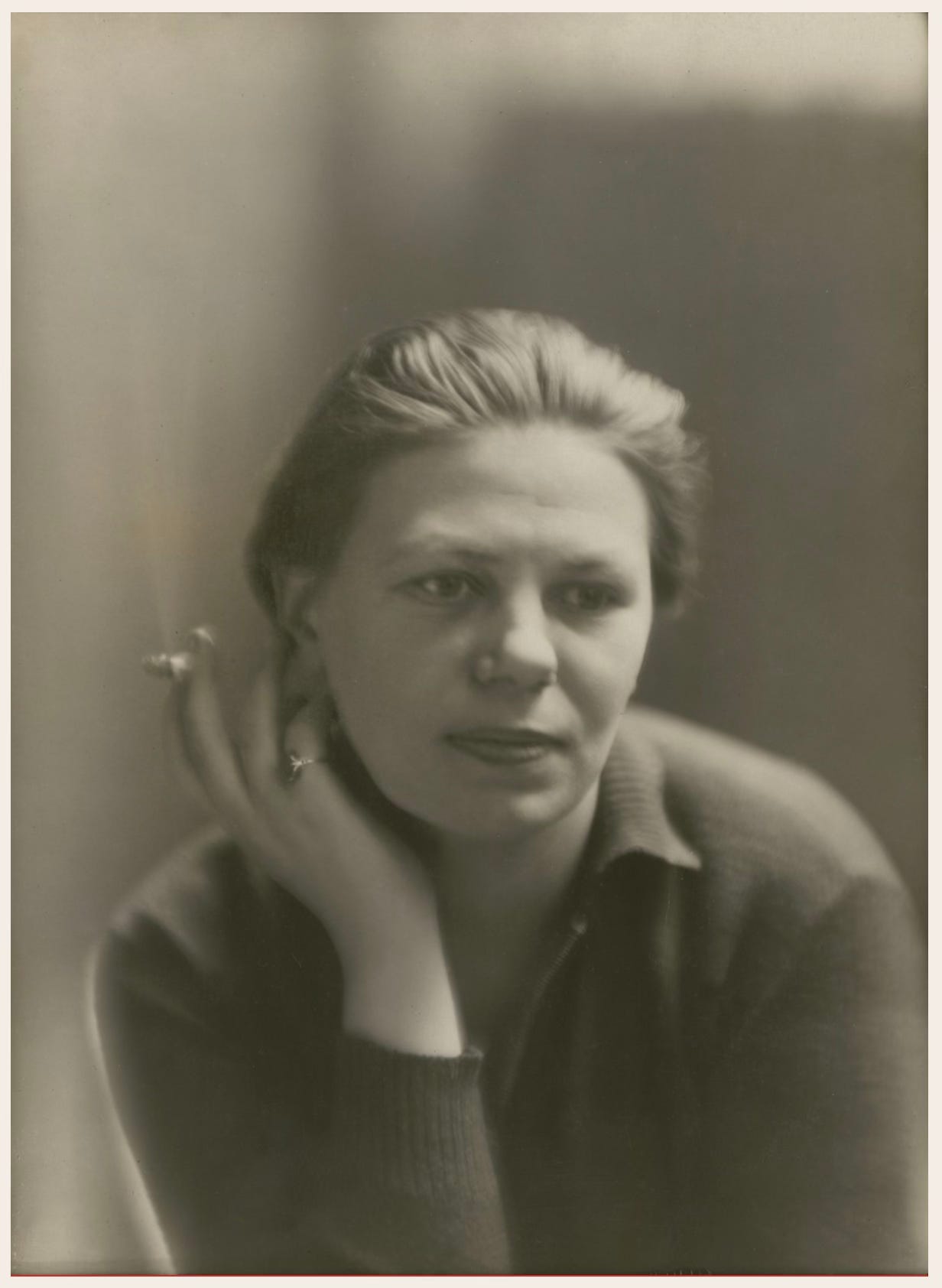
BIO: Germaine Krull (1897–1985)
By the time Germaine Krull arrived in Saigon in September 1945, she had already lived several remarkable lives. Born in East Prussia to German parents, she trained as a photographer in Munich before being swept up in the revolutionary politics that convulsed post-war Europe. Restless, fiercely independent and deeply sceptical of authority, she worked across Germany, the Netherlands and France, becoming one of the leading figures of the photographic avant-garde. Her celebrated portfolio Métal (1928), with its bold studies of cranes, bridges and industrial structures, helped redefine modern photography, while her work for the pioneering French magazine VU established her as one of Europe’s first great photojournalists.
Unlike many of her contemporaries, Krull cared less for artistic theory than for people and events. Armed with a small handheld camera, she photographed dockworkers, tramps, cafés, markets, ports and city streets with an immediacy that was revolutionary for its time. She published books devoted entirely to photography, helped invent the modern photo-essay, collaborated with writers including Georges Simenon, and believed that a photographer’s first duty was not to compose beautiful pictures but to bear witness. As she later wrote: “The true photographer is the witness of each day’s events, a reporter.”
When the Second World War broke out, Krull joined the Free French and followed the Allied advance through liberated Europe before travelling to Southeast Asia as a war correspondent. It was in that capacity that she spent thirteen extraordinary days in Saigon during September 1945, arriving just as Japanese rule gave way to a struggle between British occupation forces, returning French officials and the Viet Minh. The diary she kept there is the record of a gifted observer watching, almost day by day, the opening chapter of the First Indochina War.
After leaving Indochina, she settled in Bangkok, where she became director of the Oriental Hotel and helped restore it to international renown. Later she moved to India, converted to Buddhism, and spent many years near Dehra Dun working among the Tibetan exile community. She died in Germany in 1985, having lived one of the most extraordinary and unconventional lives of any twentieth-century photographer.
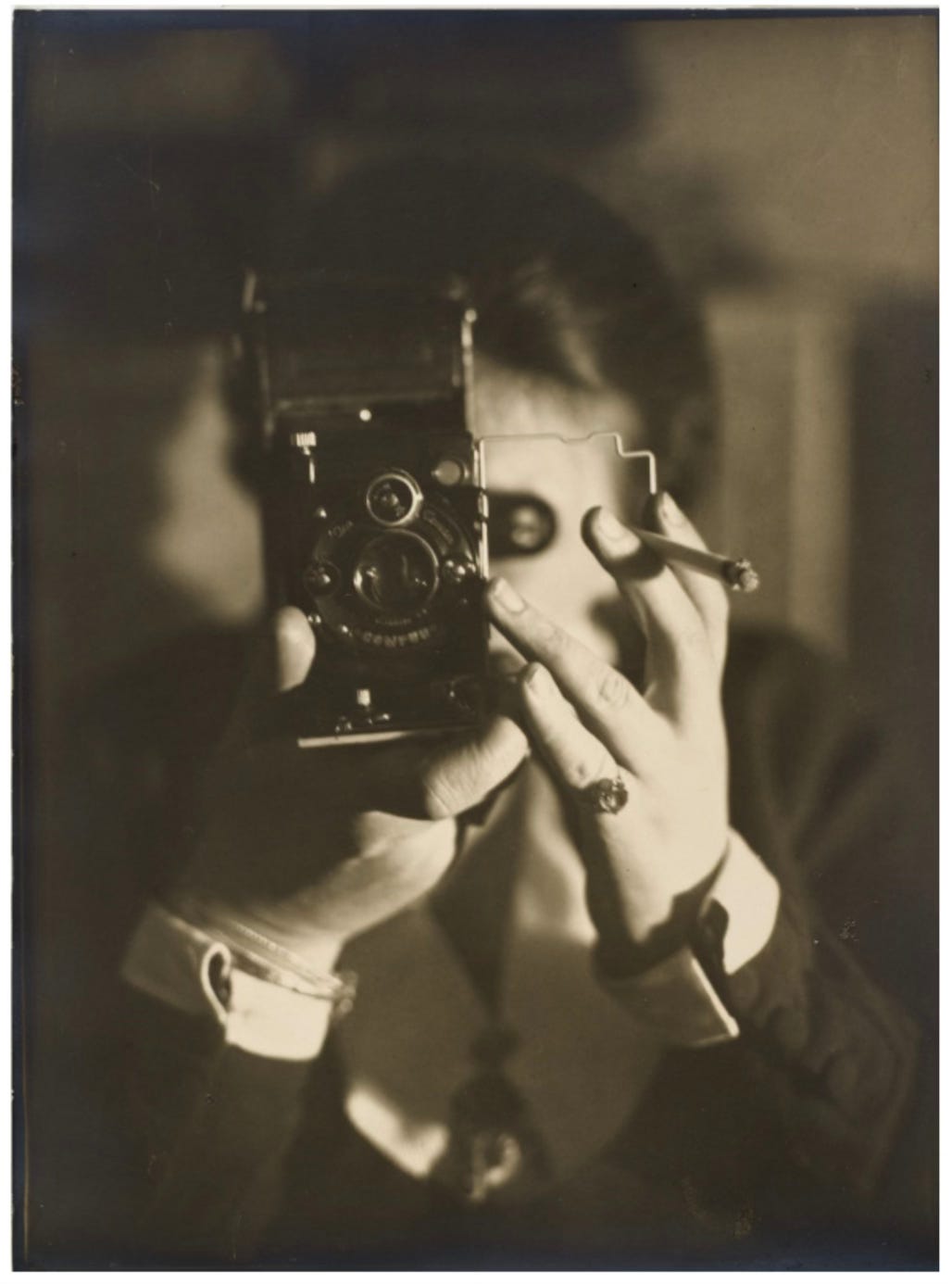
I have written about Madeleine O’Connell (a.k.a. Madame Canon) before — her story is also a remarkable one. Link is here.
Wow! Your research is amazing. Gotta love the European comment at the beginning, complaining about the native people:
‘How much longer must we put up with these blasted Annamites?’
And then it gets worse.
Good one! Thanks so much